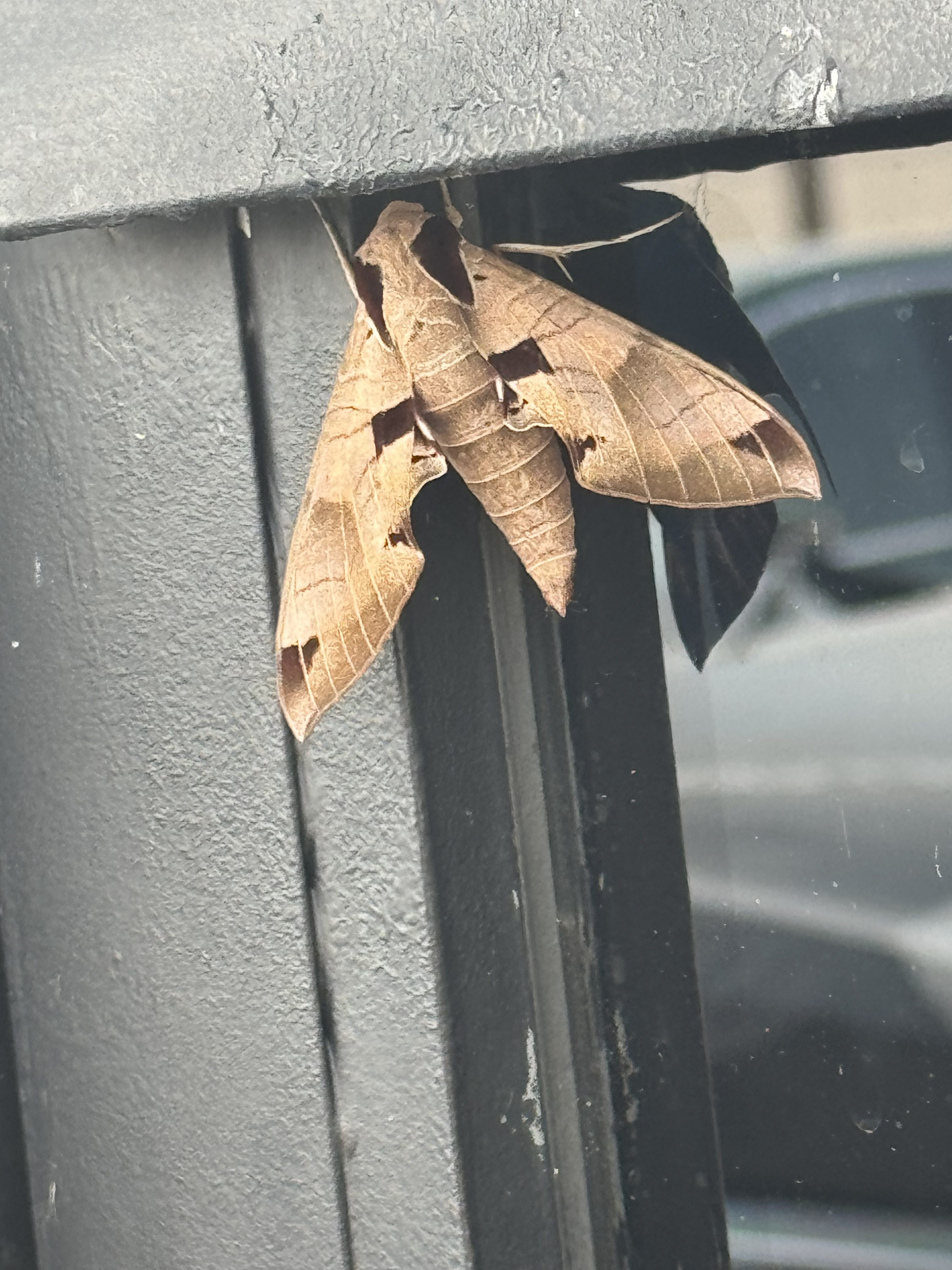
At first glance, it looks like nothing more than a dried brown leaf stuck to the side of a building.
But this unusual insect recently spotted in Midwest City, Oklahoma, is actually a large sphinx moth — one of the most impressive camouflage experts found in Oklahoma wildlife.
Its wings, colors, and body shape are specifically designed to mimic dead leaves and tree debris, helping it disappear from predators during the daytime. Most people would walk right past it without ever realizing they were looking at a living insect.
What Kind of Moth Is This?
This moth appears to be a Pandora Sphinx moth or a closely related hawk moth species from the Sphingidae family.
These moths are known for:
- large wingspans
- fast flight
- thick, streamlined bodies
- incredible camouflage
- nighttime pollination
Sphinx moths are commonly found throughout Oklahoma during warmer months and are often seen around porch lights, gardens, wooded neighborhoods, and areas with mature trees.
Another interesting bug native to Oklahoma is the assassin bug, you can learn more about them below.
Why Does It Look Like a Dead Leaf?
The camouflage is intentional.
During the daytime, sphinx moths rest motionless on trees, fences, walls, and vegetation where birds and predators hunt by sight. Their leaf-like appearance helps them blend naturally into bark, leaves, and shadows.
Even the wing edges and patterns help break up their outline, making them difficult to detect.
In wooded Oklahoma neighborhoods, this camouflage can be remarkably effective.
Fun Facts About Oklahoma’s Sphinx Moths
They Can Hover Like Hummingbirds
Some sphinx moths feed while hovering in front of flowers, similar to hummingbirds. Many homeowners mistake them for tiny birds at dusk.
They’re Extremely Fast Flyers
Sphinx moths are among the fastest insects in North America, with some species capable of flying over 30 miles per hour.
They Help Pollinate Flowers at Night
While bees work during the day, many moth species quietly help pollinate plants during Oklahoma evenings and nighttime hours.
Most People Never Notice Them
Because they fly mostly at night and camouflage so well during the day, many people never realize these moths are living around them.
They’re Completely Harmless
Despite their large size, sphinx moths do not sting, bite, damage homes, or create structural problems.
What Do Baby Sphinx Moths Look Like?
Before becoming moths, sphinx moths begin life as caterpillars commonly known as hornworms.

These caterpillars often have:
- bright green coloring
- striped patterns
- a small horn-like structure on the rear of the body
Depending on species, they may feed on:
- grape vines
- Virginia creeper
- native Oklahoma plants
- garden vegetation
After the caterpillar stage, they form pupae beneath soil or leaf litter before eventually emerging as adult moths.
How to Coexist With Sphinx Moths in Oklahoma
Sphinx moths are beneficial native insects and an important part of Oklahoma ecosystems. Because they are harmless pollinators, they are best left undisturbed whenever possible.
Reduce Unnecessary Insecticide Use
Broad-spectrum insecticides can harm beneficial insects along with pest species.
Leave Outdoor Lights Off When Possible
Bright exterior lights can disrupt nighttime pollinators and attract large numbers of insects unnecessarily.
Plant Native Flowers and Vegetation
Native Oklahoma plants help support moths, butterflies, bees, and other pollinators.
Appreciate Their Role in Nature
Even though they may look unusual, sphinx moths play an important role in maintaining healthy local ecosystems.
Are Sphinx Moths Common in Oklahoma?
Yes. Sphinx moths are commonly found throughout Oklahoma, including:
- Midwest City
- Oklahoma City
- Edmond
- Norman
- Tulsa
- wooded suburban neighborhoods
- areas near trees, creeks, and gardens
They are most active during warm spring and summer nights.
Do These Moths Damage Homes?
No.
Unlike termites, carpenter ants, or other structural pests, sphinx moths do not damage homes or invade attics. They are harmless visitors that typically rest quietly during the day before becoming active again at night.
For most homeowners, they are simply an interesting part of Oklahoma’s native wildlife.
Some Oklahoma insects rely on camouflage for survival, while others depend on painful bites or warning colors. You can also explore our guide to Oklahoma wheel bugs and other unusual native insects.
Discover more native Oklahoma insects and bugs.
Final Thoughts
Oklahoma is home to an incredible variety of wildlife that often goes unnoticed in everyday life. From giant moths that mimic dead leaves to hidden nighttime pollinators, many native species quietly play important roles in local ecosystems.
This Midwest City sighting is a great reminder that some of Oklahoma’s most fascinating wildlife can sometimes be found hiding in plain sight.
Leave a Reply